Every business will face disruption at some point. It might be a cyberattack, a flood, a supplier failure, a pandemic or a simple power cut. What separates resilient organisations from vulnerable ones is not whether disruption happens, but how prepared they are when it does.
A business continuity plan (BCP) is a documented strategy that explains how an organisation will keep its essential operations running during and after a disruptive event. It identifies what matters most, what could go wrong and exactly what the business will do to continue serving customers, protecting staff and limiting financial loss.
While continuity plans cover many types of risk, one dependency sits beneath almost all of them: electrical power. Without power, computers stop, communications fail, cold storage warms, security systems go dark and production lines halt. This article explains what a business continuity plan includes, why power deserves special attention and how organisations can build genuine power resilience.
Continuity plans vary by industry and size, but most effective plans share the same foundations. International standards such as ISO 22301 provide a formal framework, although even small businesses can apply the same principles in a simpler form.
Business impact analysis. This is the starting point. The organisation identifies its critical activities and assesses what would happen if each one stopped. How much revenue would be lost per hour? Which customers would be affected? Are there legal, regulatory or safety consequences? The analysis produces two key measures: the recovery time objective (RTO), which is how quickly a function must be restored, and the maximum tolerable period of disruption, beyond which the damage becomes unacceptable.
Risk assessment. Next, the business identifies the threats that could interrupt those critical activities and estimates their likelihood and impact. Typical risks include utility failures, extreme weather, fire, equipment breakdown, IT outages, supply chain disruption and loss of key staff.
Continuity strategies. For each critical activity, the plan defines how it will continue or recover. This might involve backup systems, alternative sites, remote working, spare equipment, secondary suppliers or pre-arranged service agreements.
Roles and communication. A plan only works if people know what to do. It should name who is responsible for decisions, who contacts customers and suppliers, and how staff will be informed. Contact lists must be current and accessible even if the office is unavailable.
Testing and review. Finally, the plan must be tested through exercises and updated regularly. A plan written three years ago and never rehearsed is unlikely to work when it is needed.
When organisations list their critical activities, they often focus on systems, people and processes. Yet nearly every one of those activities depends on electricity. A power failure does not create a single problem. It triggers many problems at once.
Consider what stops when power is lost:
The cost of these interruptions can be significant. For data centres, hospitals, hotels, manufacturers and retailers, even a short outage can mean lost revenue, spoiled stock, damaged equipment, contractual penalties and harm to reputation. In some sectors, such as healthcare, the consequences can be a matter of life and death.
Power disruption also comes from more directions than many businesses expect. It is not only about unplanned grid failures caused by storms or faults. Planned maintenance by utility providers, internal electrical upgrades, equipment failure in a building's own generator and extreme heat that strains cooling and electrical systems can all interrupt supply. Construction and refurbishment projects frequently require temporary shutdowns as well.
Power resilience means ensuring that critical operations can continue, or be safely shut down and restored, whatever happens to the main supply. The following steps provide a practical framework.
Not everything needs backup power. Start by listing the systems that must keep running during an outage, such as servers, cold rooms, emergency lighting, security systems and essential production equipment. Record the power requirement of each. This list defines the size and type of backup system you need and prevents you from paying to protect non-essential loads.
Different systems tolerate interruption differently. A server room may need uninterrupted power, which requires an uninterruptible power supply (UPS) to bridge the gap while a generator starts. A cold room might tolerate a short outage. An office printer can simply wait. Aligning your power strategy with each recovery time objective keeps costs proportionate.
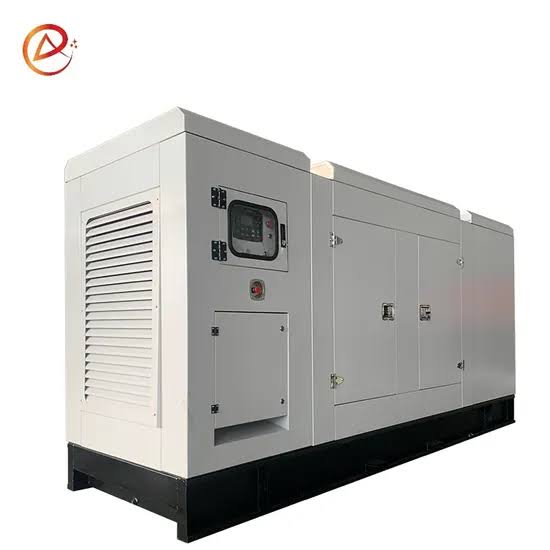
Common solutions include uninterruptible power supplies for instant short-term protection, standby generators for extended outages, and automatic transfer switches that detect a failure and switch to backup power within seconds without human intervention.
Many organisations own permanent backup generators. However, owned equipment can fail, need servicing or prove too small when the business grows. This is why many continuity plans also include power rental solutions as a contingency. Temporary generators can cover planned maintenance on permanent systems, replace a failed unit, support a site during an upgrade or provide extra capacity during an extended crisis.
The middle of an emergency is the worst time to search for equipment. During widespread outages or extreme weather, demand for generators and fuel rises sharply, and suppliers may be fully committed.
Establish relationships with qualified power providers in advance. Agree response times, confirm equipment availability and, where possible, have the site surveyed so that connection points, cable routes and generator positions are already known. Some businesses install a pre-wired connection point, allowing a temporary generator to be connected quickly and safely.
A generator is only as reliable as its fuel supply. Calculate how long your backup system can run on the fuel held on site, and agree emergency fuel delivery arrangements for longer outages. Store fuel correctly, and test it periodically, since diesel can degrade over time.
Backup power systems that are never tested often fail when they are needed most. Run generators under load at regular intervals, test automatic transfer switches and simulate power loss during continuity exercises. Record the results, fix any problems and update the plan accordingly.
A business continuity plan is one of the most valuable documents an organisation can own. It turns uncertainty into a clear set of actions and gives leaders the confidence to respond calmly when disruption strikes.
Power deserves a central place in that plan. It is the hidden dependency behind almost every critical activity, and its loss can trigger failures across IT, operations, safety and customer service simultaneously. By identifying critical loads, matching backup solutions to recovery objectives, arranging support in advance and testing regularly, businesses can ensure that a power cut becomes a manageable inconvenience rather than a crisis.
The best time to plan for a power failure is while the lights are still on.

This post has been authored and published by one of our premium contributors, who are experts in their fields. They bring high-quality, well-researched content that adds significant value to our platform.











Your trusted source for technology news, AI updates, business insights, startup stories, cybersecurity, gadgets, and digital innovation.